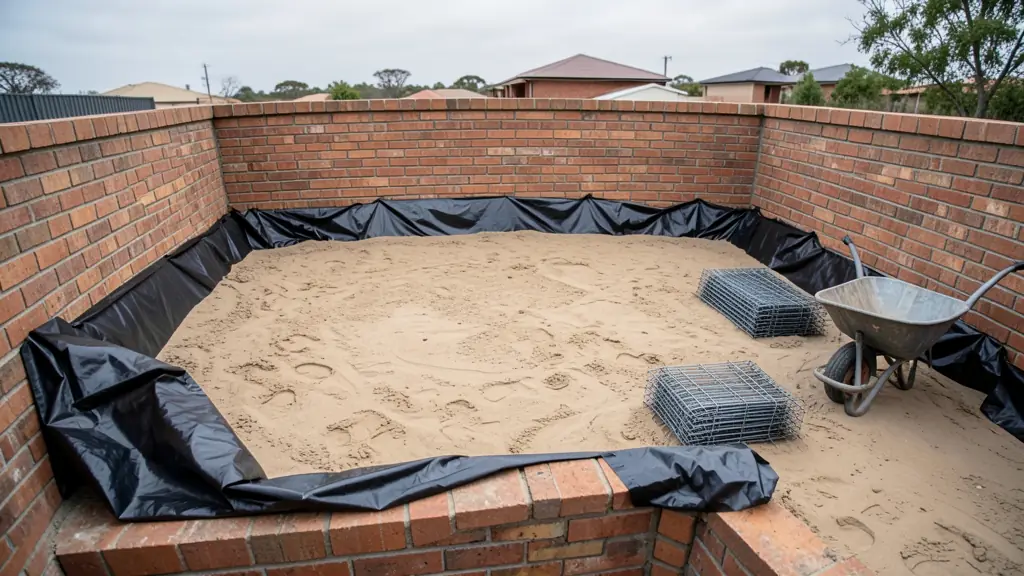
Builders' plastic is sold by the micron, and that number decides where a roll belongs. A 250 micron sheet under a slab in Soshanguve does a different job from the thin drop sheet a painter throws over a lounge floor, and both differ from the UV stable film over a tunnel in Tzaneen. Choose the thickness for the job first. Then work out the roll width against the area, and plan the overlaps before the concrete truck is booked.
Price guide
Building suppliers list 250 micron builders' plastic at about R600 to R748 for a 3 x 30 m roll (R748 incl. VAT), and a plastics shop sells it off the roll at about R65.55 a metre of length for 3 m wide black, incl. VAT.
A rough guide from published South African prices. Thickness, coating, length, cutting, delivery and VAT all move it.
Which micron is right for which job?
One micron is a thousandth of a millimetre, which makes a 250 micron film about as thick as a quarter of a millimetre.
| About | Common use |
|---|---|
| 25 to 50 micron | painters' drop sheets, dust screens in a renovation |
| 100 to 150 micron | covering stock, temporary weather sheets |
| 250 micron | damp proof membrane under slabs |
| 375 micron, embossed | DPC strips in brick walls |
| 150 to 200 micron, UV stable | tunnel and greenhouse film |
What goes under a slab and into the walls?
A damp proof membrane under a floor slab is a building regulation requirement, and builders commonly use 250 micron. It goes onto sand blinding over compacted fill so that stones cannot puncture it, with joints overlapped by about 200 mm and taped, and the edges turned up against the walls. Tape every hole torn by mesh, chairs or wheelbarrows before the pour. DPC in walls is a separate, heavier product in strips cut to wall widths. Cheap recycled film can carry pinholes, so hold a length up to the light.
Black, clear or UV stable on the farm?
Black film smothers weeds and seals silage clamps, and much silage plastic is white on one side to stay cooler. Clear film solarises beds before planting. Tunnel film carries UV stabilisers and is sold by the number of seasons it should last, whereas plain builders' plastic left in the sun goes brittle within months. Dams and evaporation pits need a proper welded geomembrane laid by a specialist, which is a different product; small ponds can use EPDM rubber sheeting.
How much will I need, and how heavy is a roll?
Rolls are commonly 3 or 4 m wide, folded, but lengths vary by supplier, so compare square metres per roll rather than rolls. Add about a tenth or more for overlaps and turn ups. At 250 micron, polyethylene weighs about 0.23 kg per m², so enough to cover 100 m² is about 23 kg. The plastic sheeting calculator does the sum from your area, micron and overlap.
Who asks for this
- Homeowners and DIY
- Drop sheets for painting, a cover for the braai wood or a DPM for a new room.
- Builders and contractors
- DPM under every slab, DPC in the walls and covers for cement and stock on site.
- Farms and smallholdings
- Tunnel film, black weed film, silage covers and temporary covers on feed and fertiliser.
- Factories and workshops
- Dust sheets during shutdowns and covers over machines and stock during roof work.
- Shopfitters and signwriters
- Painters and renovators covering floors and shop fittings during a revamp.
- Schools, clinics and municipalities
- DPM for classrooms and clinics built under a programme, and covers during repairs.
- Mines and plants
- Covers over stockpiles and temporary linings on site, with proper liners for dams.
- Resellers, fabricators and installers
- Hardware stores and merchants buying rolls by the pallet in several microns.
Frequently asked questions
Does the colour of DPM matter?
Not for keeping damp out. Black film is often made from recycled plastic, though, so ask for DPM printed with its thickness and grade, and buy from a supplier who will stand behind it.
Why does plastic keep tearing on site?
Stones, sharp mesh, wind and foot traffic. Lay sand blinding first, weigh the edges down on windy days, cut the plastic rather than tearing it, and tape any damage before the concrete goes on.
Can plastic sheeting cover a storm damaged roof?
As a stopgap, yes, but a heavy woven tarpaulin holds better. Cover what you can safely reach from a ladder, stay off the roof itself, and call one of the roof sheeting installers.
Who will quote me for plastic rolls?
Your request goes to independent hardware stores, building merchants and plastic converters near you, and each quotes you directly. Give the micron, the colour, the roll width and the area to cover.